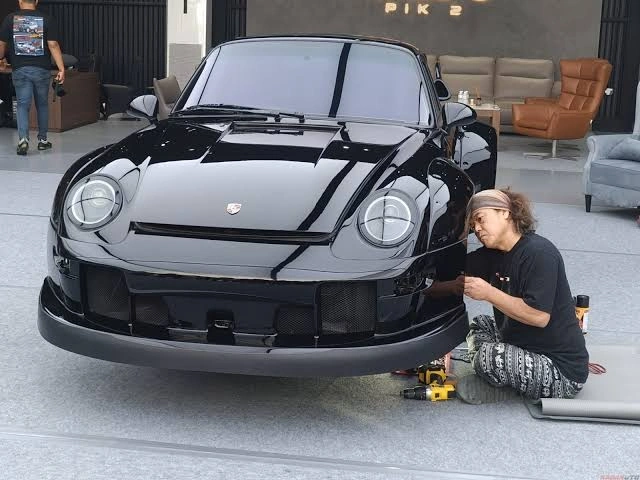
Akira Nakai: The Man Who Turned Porsche Into Rolling Art
Akira Nakai: The Man Who Turned Porsche Into Rolling Art | Few names in the world of automotive customization are as instantly recognizable as Akira Nakai.

With his signature wide-body designs, exposed rivets, enormous wings, deep-dish wheels, and unmistakable visual style, Nakai has transformed the Porsche 911 into something far beyond a traditional sports car.
Through his company, RAUH-Welt BEGRIFF, better known as RWB, Nakai created a style that divides Porsche enthusiasts. Some see his cars as radical works of automotive art, while others believe classic Porsches should remain closer to their original form.
Whatever side of the debate you are on, one thing is difficult to deny: Akira Nakai changed the way the world thinks about customized Porsche cars.
1. His Story Started With Japanese Drift Culture
Before he became famous for transforming Porsche 911s, Nakai was deeply involved in Japanese street and drift culture.
He was associated with a group known as Rough World and developed his style around the Toyota AE86.
The AE86 became an important part of Japan’s early drifting culture, and Nakai experimented with aggressive suspension setups, deep-dish wheels, wide fenders, and extreme negative camber.
This early experience would later become an important part of the RWB philosophy.
Rather than treating a car as a perfect factory product, Nakai wanted it to have personality.
2. Porsche Was a Completely Different Canvas
Nakai eventually encountered Porsche cars while working at a body shop.
The combination immediately fascinated him.
Porsche had already created a legendary sports car with the 911, but Nakai saw something else: an opportunity to reinterpret the car through Japanese tuning culture.
Instead of simply improving the factory design, he wanted to create something more aggressive and personal.
That philosophy eventually became the foundation of RWB.
3. Stella Artois Became the Beginning of RWB Porsche
One of the most important cars in Nakai’s story is his Porsche 930 known as Stella Artois.
The car began as an older Porsche that Nakai purchased and transformed into his own extreme interpretation of a 911.
He modified the body, suspension, wheels, and performance while creating the aggressive appearance that would later become synonymous with RWB.
Stella Artois wasn’t simply a customer project.
It was essentially Nakai’s personal laboratory.
Through the car, he developed ideas that would eventually become the visual language of Rauh-Welt BEGRIFF.
4. RWB Cars Look Like Race Cars From Another Universe
The RWB appearance is almost impossible to confuse with anything else.
The cars typically feature dramatically widened fenders, oversized spoilers, aggressive bumpers, deep-dish wheels, lowered suspension, and exposed hardware.
The result is a Porsche that looks like it escaped from a 1970s or 1980s racing paddock and was redesigned for modern street culture.
Nakai draws heavily from the visual language of racing.
However, RWB cars are generally designed to exist somewhere between street cars and track machines.
They are meant to be driven, not simply displayed.
5. Nakai Doesn’t Believe Everything Has to Be Perfect
This may be one of the most important ideas behind his work.
Modern automotive design often focuses on precision and flawless manufacturing.
Nakai’s approach is different.
His cars frequently retain visible rivets, seams, imperfections, and handmade characteristics.
Rather than hiding every sign of human craftsmanship, he allows those details to become part of the design.
This gives every RWB Porsche a handmade character that is difficult to reproduce through mass production.
6. Every RWB Porsche Has Its Own Personality
Although RWB cars share recognizable design elements, no two builds have to look exactly the same.
Owners can choose different colors, wheels, body details, interiors, and other specifications.
This means the Porsche becomes a collaboration between the owner and Nakai.
The result is more personal than simply purchasing an aftermarket body kit.
The owner provides the canvas, while Nakai creates his interpretation of that particular car.
This philosophy has helped RWB develop a strong community of enthusiasts around the world.
7. Nakai Personally Works on the Cars
One of the most fascinating parts of the RWB experience is Nakai’s hands-on approach.
Rather than designing a kit and sending it to a customer for installation, Nakai has become famous for personally traveling to different locations to build cars.
He measures, cuts, positions, adjusts, and finishes the components himself.
The process can be surprisingly direct.
A classic Porsche may arrive looking relatively ordinary and leave the workshop with an entirely different identity.
This hands-on craftsmanship is a major part of what makes RWB different from conventional tuning companies.
8. The Famous Fender Cutting Is Part of the Experience
Perhaps no image is more closely associated with Nakai than the moment he cuts into a Porsche’s original bodywork.
For Porsche purists, this can be difficult to watch.
A classic 911 is already a highly desirable automobile, and cutting its original fenders permanently changes the car.
But for Nakai, this transformation is fundamental to the creative process.
The Porsche becomes a new object.
Instead of preserving the car exactly as it left the factory, he creates another interpretation of what the 911 can become.
That philosophy is one of the reasons RWB remains so controversial—and so fascinating.
9. RWB Blends Japanese and German Car Culture
At its heart, RWB represents a cultural collision.
The Porsche 911 is one of Germany’s most famous automotive designs.
Nakai approaches it through the perspective of Japanese tuning and street culture.
The result combines German engineering with Japanese customization philosophy.
This mixture explains why RWB feels so different from traditional European Porsche tuning.
It isn’t trying to make the Porsche more conservative or refined.
It wants the car to become louder, wider, lower, and more expressive.
10. The Wheels Are a Huge Part of the Formula
An RWB Porsche isn’t complete without the right wheels.
Deep-dish wheels and aggressive fitment are essential components of the visual formula.
The wheels help emphasize the enormous fenders and give the car its distinctive stance.
Combined with extremely low suspension and wide tires, they create the impression that the Porsche has been stretched outward from every direction.
The result is one of the most recognizable silhouettes in modern car culture.
11. RWB Became a Global Phenomenon
What started as a relatively small operation in Japan eventually developed an international following.
RWB builds appeared across North America, Europe, Asia, and other parts of the world.
Nakai’s willingness to travel and personally create cars for owners helped turn each build into an event.
People weren’t simply buying a modified Porsche.
They were participating in an experience.
This helped create a community around RWB that goes beyond traditional automotive ownership.
12. His Cars Became Automotive Art
Eventually, the conversation around RWB moved beyond performance.
People began discussing the cars as art.
The exaggerated proportions, unusual colors, personalized details, and handmade construction make each car visually distinctive.
Some RWB Porsches are immediately recognizable from across a parking lot.
That is an extraordinary achievement considering they are based on a design that has existed for decades.
Nakai didn’t replace the identity of the Porsche 911.
He exaggerated it.
13. Porsche Purists Don’t Always Approve
The popularity of RWB doesn’t mean everyone loves the concept.
Some Porsche enthusiasts strongly oppose cutting into classic 911s.
Their argument is straightforward: a vintage Porsche has historical and collectible value, and permanent modifications can reduce its originality.
For these enthusiasts, a classic 911 should be preserved.
RWB supporters see things differently.
They believe cars are meant to be driven, enjoyed, modified, and given new life.
This disagreement has become part of the RWB story itself.
14. Nakai’s Philosophy Is About Emotion
Perhaps the most important element of Nakai’s work isn’t the body kit.
It’s emotion.
His cars aren’t designed to appeal to everyone.
They are designed to create a reaction.
You might love an RWB Porsche.
You might hate it.
You might think the proportions are ridiculous.
But it is extremely difficult to look at one without noticing it.
That emotional impact is exactly what separates RWB from many conventional tuning companies.
15. He Turned the Builder Into Part of the Brand
In traditional automotive manufacturing, the designer or builder often remains anonymous.
Nakai became part of the product itself.
His appearance, clothing, workshop, tools, and hands-on building process all became recognizable elements of the RWB identity.
When Nakai arrives at a customer’s location, the build becomes an event.
People aren’t simply watching a Porsche being modified.
They’re watching an artist create something directly in front of them.
Why Akira Nakai Matters
Akira Nakai’s importance goes beyond the number of Porsche cars he has modified.
He demonstrated that a single individual could develop a distinctive automotive design language and build a worldwide community around it.
His work also challenged conventional ideas about what makes a valuable car.
Is a Porsche more valuable because it remains untouched?
Or can it become more meaningful when an owner transforms it into something completely personal?
There is no universal answer.
That debate is part of what makes automotive culture interesting.
Akira Nakai didn’t invent the Porsche 911, but he found a way to reinterpret it that few other tuners could match.
Through RAUH-Welt BEGRIFF, he combined Japanese street culture, classic Porsche engineering, racing-inspired design, and handmade craftsmanship.
The result is a car that looks less like a factory product and more like a rolling sculpture.
RWB Porsches may be controversial, but controversy has never been a weakness in Nakai’s world.
His philosophy is simple: cars should have personality, owners should have freedom, and perfection doesn’t always have to mean factory originality.
That is why Akira Nakai is more than a Porsche tuner.
He is an artist who happens to use classic sports cars as his canvas.
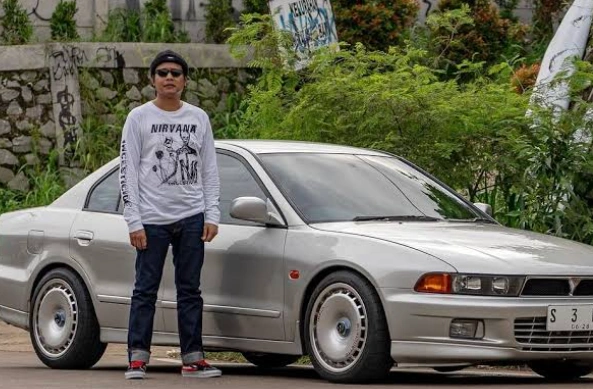
Gofar Hilman’s Concept Car Collaboration Project with Automakers
Gofar Hilman’s Concept Car Collaboration Project with Automakers | Gofar Hilman is widely recognized in Indonesia for his strong connection to automotive culture. Beyond his work in entertainment and digital media, Gofar Hilman has also been closely associated with the world of cars, custom vehicles, and automotive lifestyle.
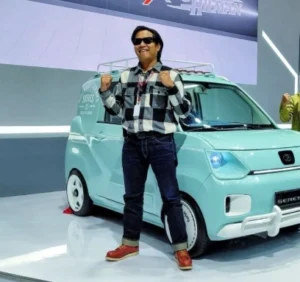
One of the most interesting aspects of his automotive journey is his concept car collaboration project with automakers. The project represents an intersection between creative ideas, automotive design, and the practical expertise of established car manufacturers.
Gofar Hilman and the Automotive World
Gofar Hilman has long demonstrated an interest in automobiles and automotive culture. His involvement goes beyond simply owning or driving cars. He has frequently explored how vehicles can become expressions of personality, lifestyle, and creativity.
This background provides an important foundation for his concept car collaboration project. Working with automakers allows creative concepts to be translated into vehicles that have a stronger connection to professional automotive design and engineering.
The collaboration also reflects a growing trend in the automotive industry, where manufacturers increasingly work with public figures, designers, artists, and cultural personalities to create vehicles that appeal to specific communities.
What Is the Concept Car Collaboration Project?
The concept behind a Gofar Hilman concept car collaboration is centered on creating a vehicle that combines automotive expertise with a distinctive creative vision.
Concept cars are generally developed to explore new ideas in design, technology, functionality, or branding. They can serve as a platform for manufacturers to experiment with ideas that may influence future production vehicles.
For Gofar Hilman, collaboration with automakers provides an opportunity to bring his perspective on automotive culture into the design process. Instead of approaching a vehicle purely from a technical standpoint, the project can incorporate elements of lifestyle, personalization, and enthusiast culture.
Combining Creativity and Automotive Expertise
One of the most important elements of the project is the combination of two different perspectives.
Gofar Hilman brings a creative understanding of automotive enthusiasts and contemporary lifestyle trends. Meanwhile, automakers contribute professional knowledge in areas such as engineering, safety, manufacturing, materials, and vehicle development.
This combination can create a concept that is not only visually distinctive but also grounded in the realities of automotive production.
The collaboration demonstrates how automotive design can become a meeting point between engineering and popular culture.
A Vehicle Inspired by Automotive Enthusiasts
Automotive enthusiasts often look for vehicles that offer more than transportation. Design, driving character, customization potential, and emotional appeal can all influence how people connect with a car.
A concept car developed through Gofar Hilman’s creative perspective can therefore be viewed as an exploration of what enthusiasts want from modern vehicles.
Elements such as exterior styling, interior details, color combinations, wheels, accessories, and overall character can be used to create a stronger identity.
This approach can make a concept vehicle feel more personal and relatable to automotive communities.
Collaboration with Automakers
The involvement of automakers is particularly important because transforming an idea into a functioning vehicle requires extensive expertise.
Manufacturers have experience with vehicle platforms, powertrains, structural engineering, electronics, safety requirements, and production processes. Their involvement can help ensure that creative ideas are evaluated from a technical perspective.
At the same time, collaboration with a personality such as Gofar Hilman can give an automaker a different perspective on how consumers perceive vehicles.
This type of partnership can ultimately create a concept that combines automotive engineering with cultural relevance.
Why Concept Cars Matter
Concept cars have an important role in the automotive industry. They allow manufacturers to present experimental ideas without immediately committing to mass production.
A concept can introduce new design language, technologies, interior layouts, or lifestyle-oriented features. Even when a concept never reaches production, some of its ideas may eventually influence future models.
For automotive enthusiasts, concept cars are also exciting because they provide a glimpse into possible directions for the future of mobility.
Gofar Hilman’s Influence on Automotive Culture
The significance of Gofar Hilman’s automotive projects extends beyond the vehicle itself. His involvement helps demonstrate how automotive culture continues to interact with entertainment, media, fashion, and lifestyle.
This connection can introduce automotive design to audiences who may not traditionally follow the industry closely.
It also highlights the changing role of automotive personalities. Today, automotive influencers and enthusiasts can participate in conversations about design and vehicle identity alongside traditional manufacturers and designers.
The Future of Automotive Collaboration
Collaborations between automakers and creative personalities are likely to remain relevant as automotive brands search for new ways to connect with consumers.
Modern car buyers increasingly consider lifestyle and identity when choosing a vehicle. As a result, partnerships that combine technical expertise with cultural insight can provide manufacturers with new opportunities to create distinctive products and experiences.
For Gofar Hilman, a concept car collaboration represents another way to express his passion for automotive culture while exploring the possibilities of creative vehicle design.
Gofar Hilman’s concept car collaboration project with automakers represents an interesting combination of creativity, automotive enthusiasm, and professional vehicle development.
By bringing together a creative automotive personality and established automakers, the project demonstrates how vehicle design can extend beyond engineering and become part of a broader cultural conversation.
The project also shows why concept cars remain important. They provide a space where new ideas can be explored, automotive communities can be represented, and manufacturers can experiment with different approaches to design and lifestyle.
As automotive culture continues to evolve, collaborations like this could become an increasingly important way to connect car enthusiasts, creative communities, and automakers.